Vets Are Pulling The Top Flea Pill From Seizure-Prone Dogs
A warning that's sat on flea-pill labels since 2018 is getting fresh attention from vets — and for dogs with a seizure history, it changes what's left to use.

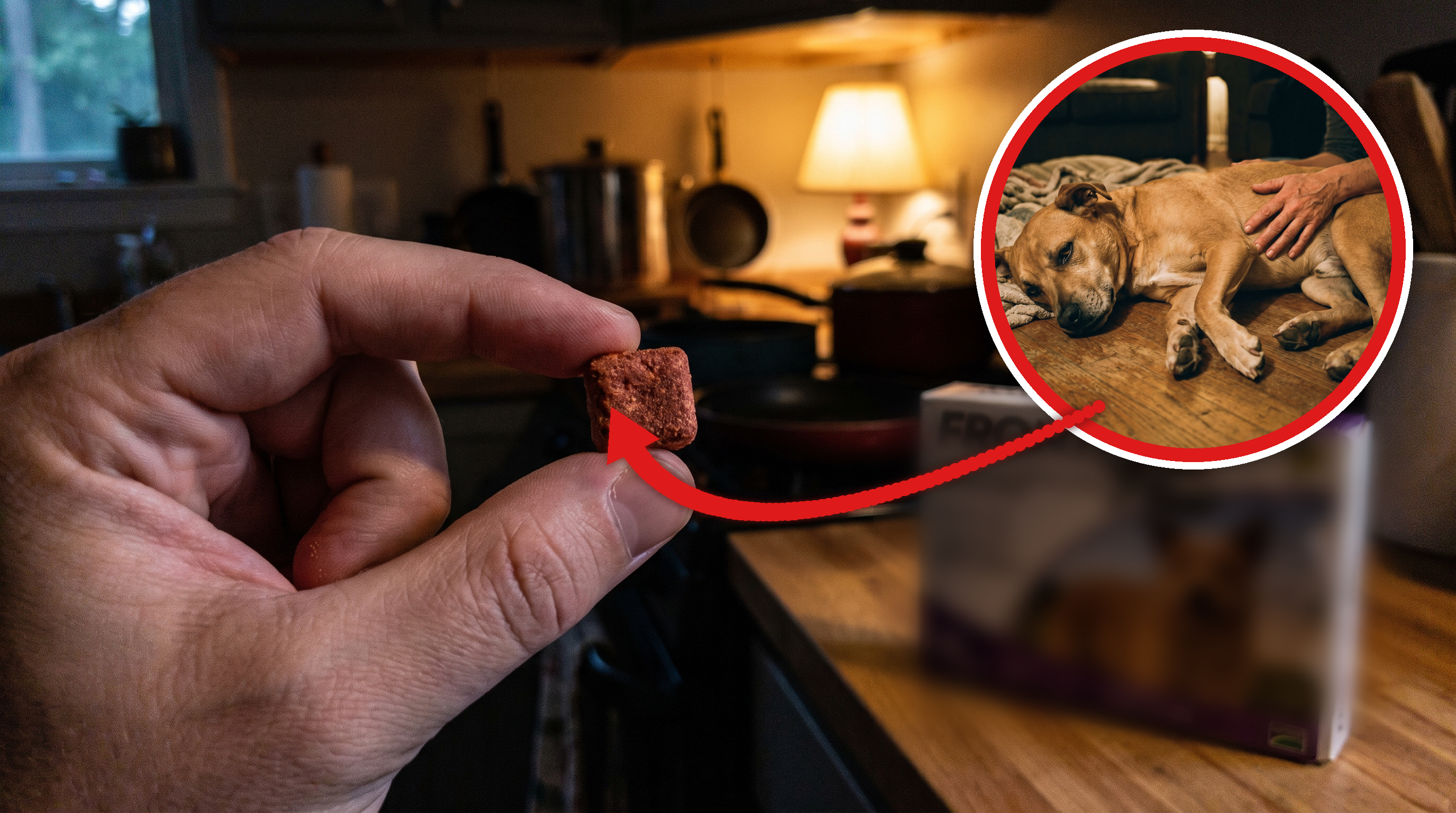
The warning was on the label the whole time
In 2018, the U.S. FDA required the makers of a common class of flea-and-tick chews to add a warning to the label.
The warning lists muscle tremors, loss of balance, and seizures.
It also states that dogs with a seizure history may be at higher risk.
The agency still says these products are safe for the majority of animals, and most dogs take them without trouble.
But "the majority" is not much comfort to the owner of a dog who already has the condition the warning names.

That is the line a growing number of vets are now drawing.
For a dog with a seizure history, more of them are recommending the oral chew be stopped, because it can lower the seizure threshold.
Some veterinary neurologists have started handing owners a simple color-coded sheet — safe, caution, avoid — sorting the flea and tick options by risk.
The chew most owners reach for first tends to land in the "avoid" column.
The problem the news doesn't mention: what's left on the shelf
Pulling the chew is the easy part.
The hard part is the question that comes right after it.
Off the chew, what does an owner protect the dog from ticks with?
This is where the shelf runs out of clean answers, and it corners the seizure-dog owner in a way it corners no one else.
Look closely and nearly every option asks her to put something into the dog she is already frightened for.
Another chewable from the same family is the same kind of drug under a different name.
A pesticide collar carries its own reported reactions.
The topical drops list convulsions on the box.
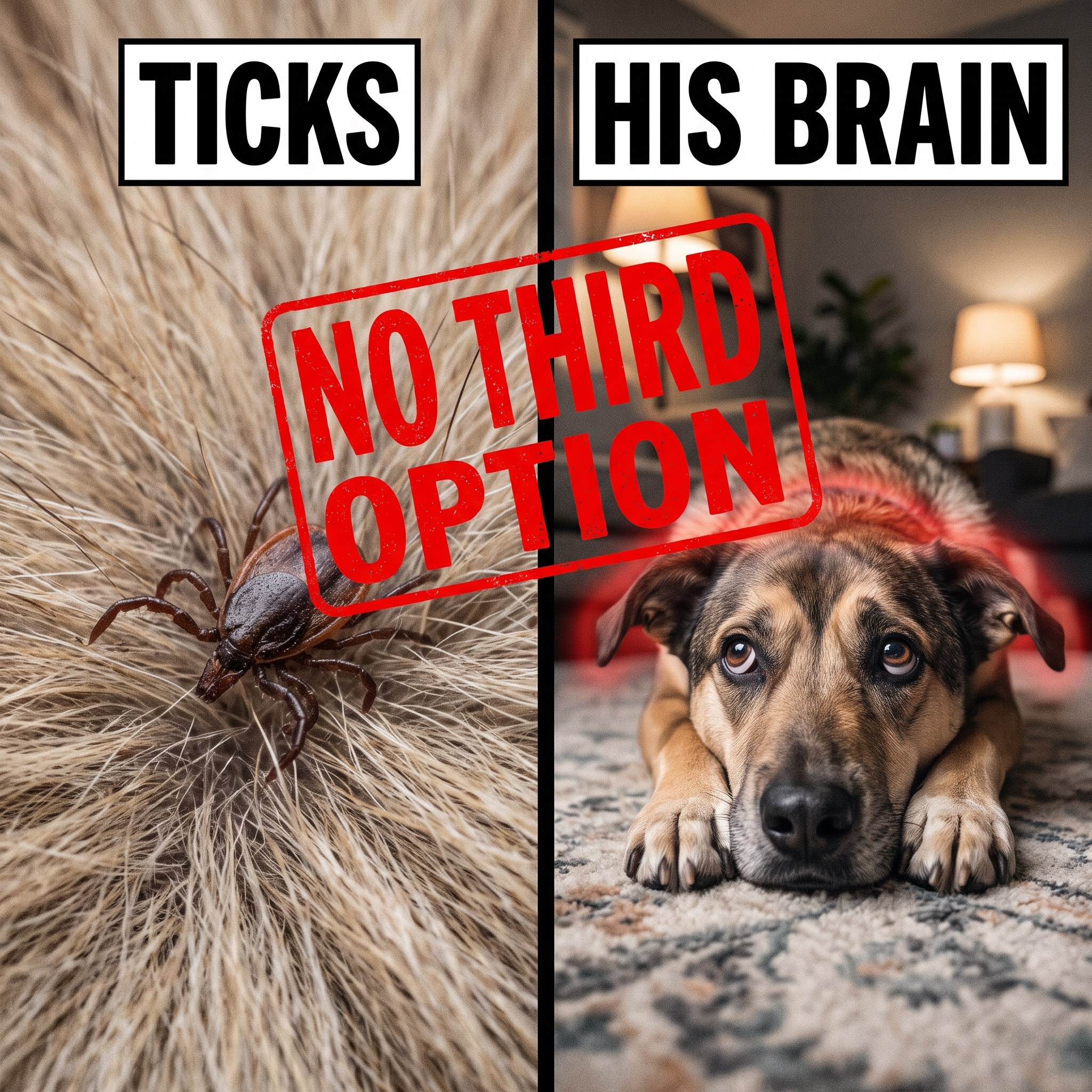
On one side are ticks and the diseases they carry. On the other is the dog's brain.
For most owners that trade-off is theoretical. For this one, it is the thing she lies awake turning over.
Why the pill is the wrong tool for this dog
There is one detail about how the pill works that almost no owner is told plainly.
The pill is not a shield that sits on the coat and keeps ticks away.
It cannot be.
It works from inside the dog.
The drug circulates in the bloodstream, and the tick has to bite and begin feeding before anything happens.
The way it then kills the tick is by attacking a nervous system.
That is the entire design of the drug.
Which is worth reading twice if the dog in question has a seizure history.
It means giving a monthly dose of something built to act on a nervous system to a dog whose own nervous system already misfires — something that can cross into the brain.
For most dogs, that is a calculated risk a vet signs off on.
For this one, it is the single thing the owner most wants to rule out.
This is also why "just use a natural spray" doesn't close the gap.
The sprays wash off and need redoing every few days, so most owners end up layering them on top of something else.
After enough trial and error, none of it adds up to a thing she can set down and stop thinking about.
A different design quietly built for exactly this gap
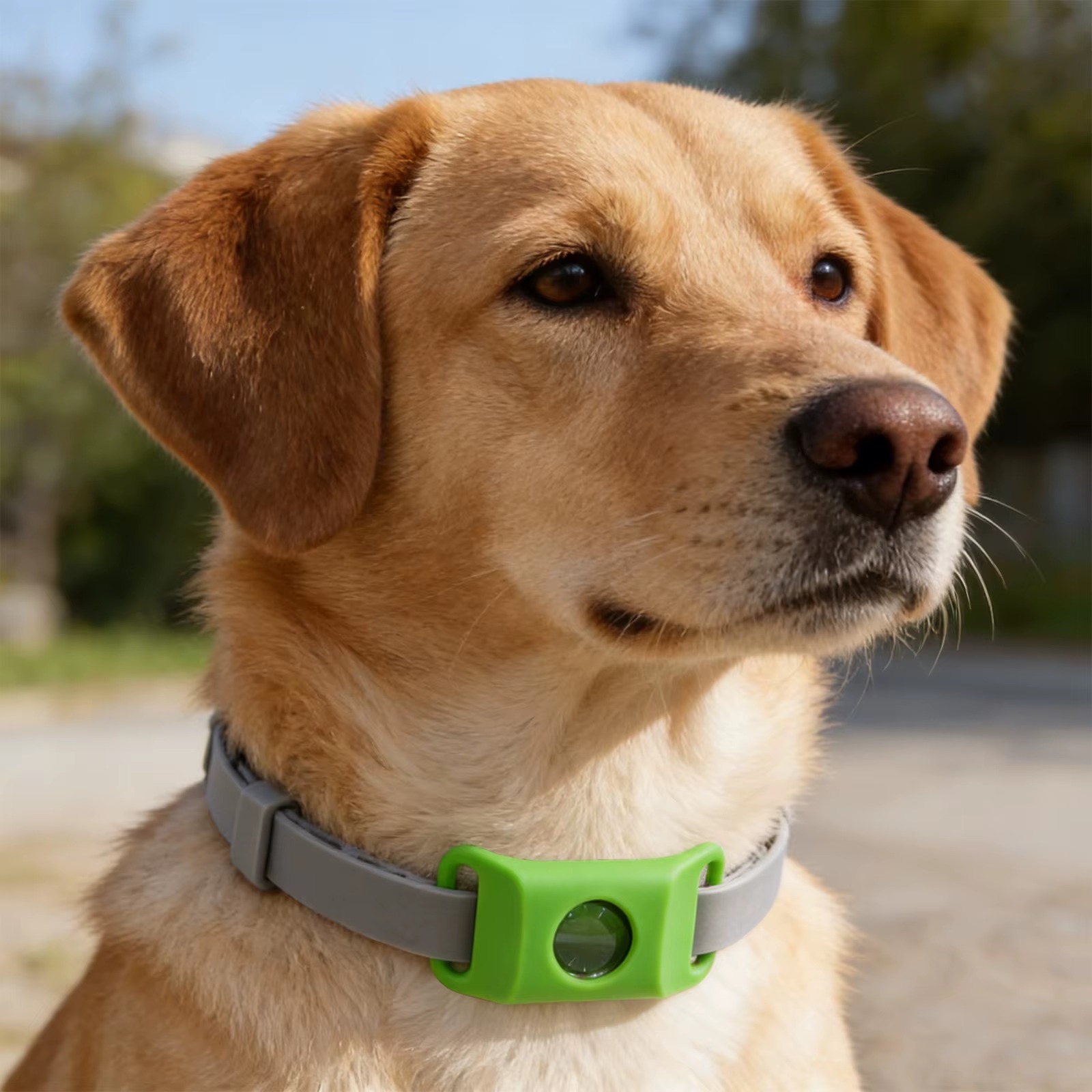
That gap is what a small pendant called Cedarfur is built to fill — and not because it is stronger than the pill.
It isn't, and anyone selling it as stronger should be ignored.
It is worth a look because of the one thing it does not do.
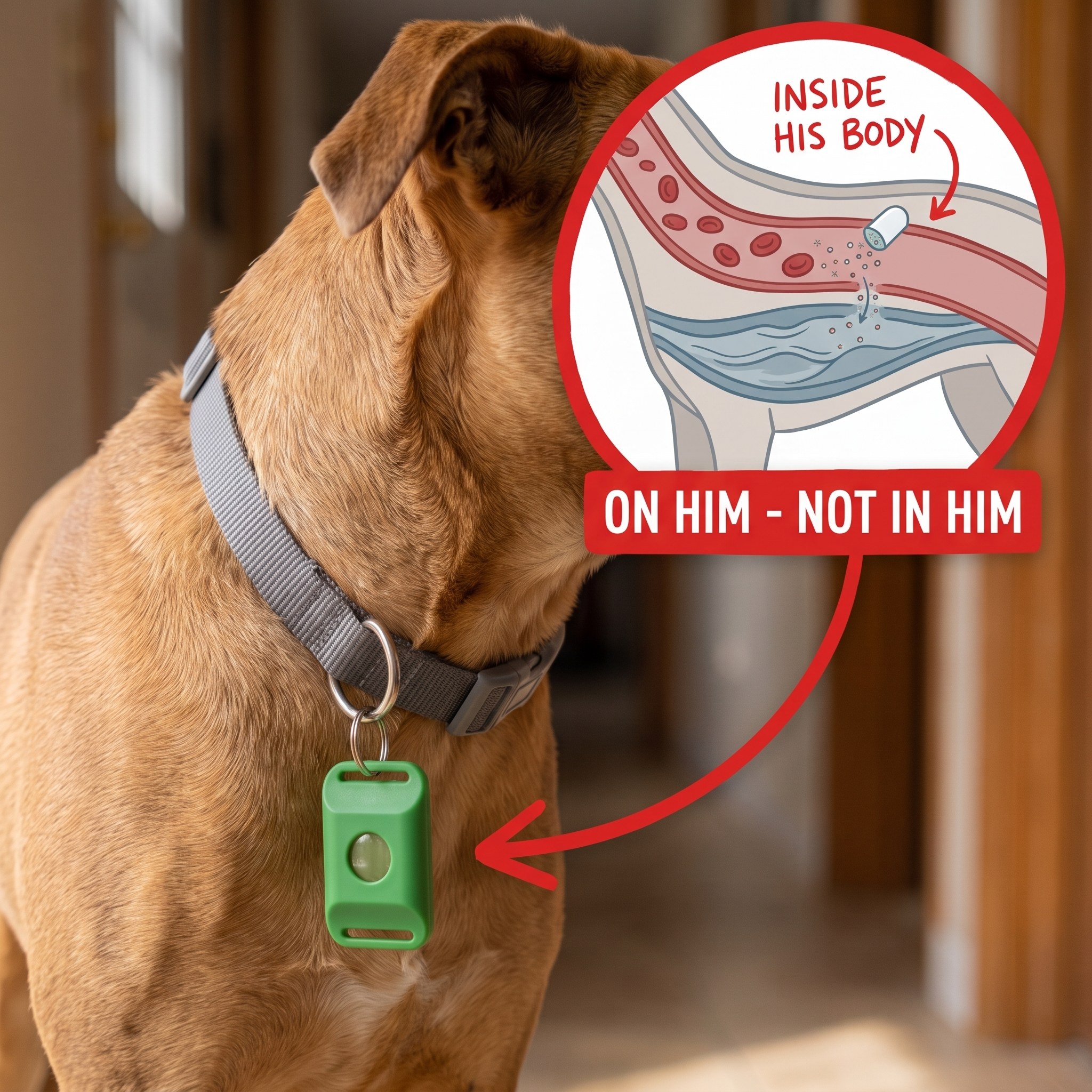
It does not go inside the dog.
It clips onto the collar and sits on the outside.
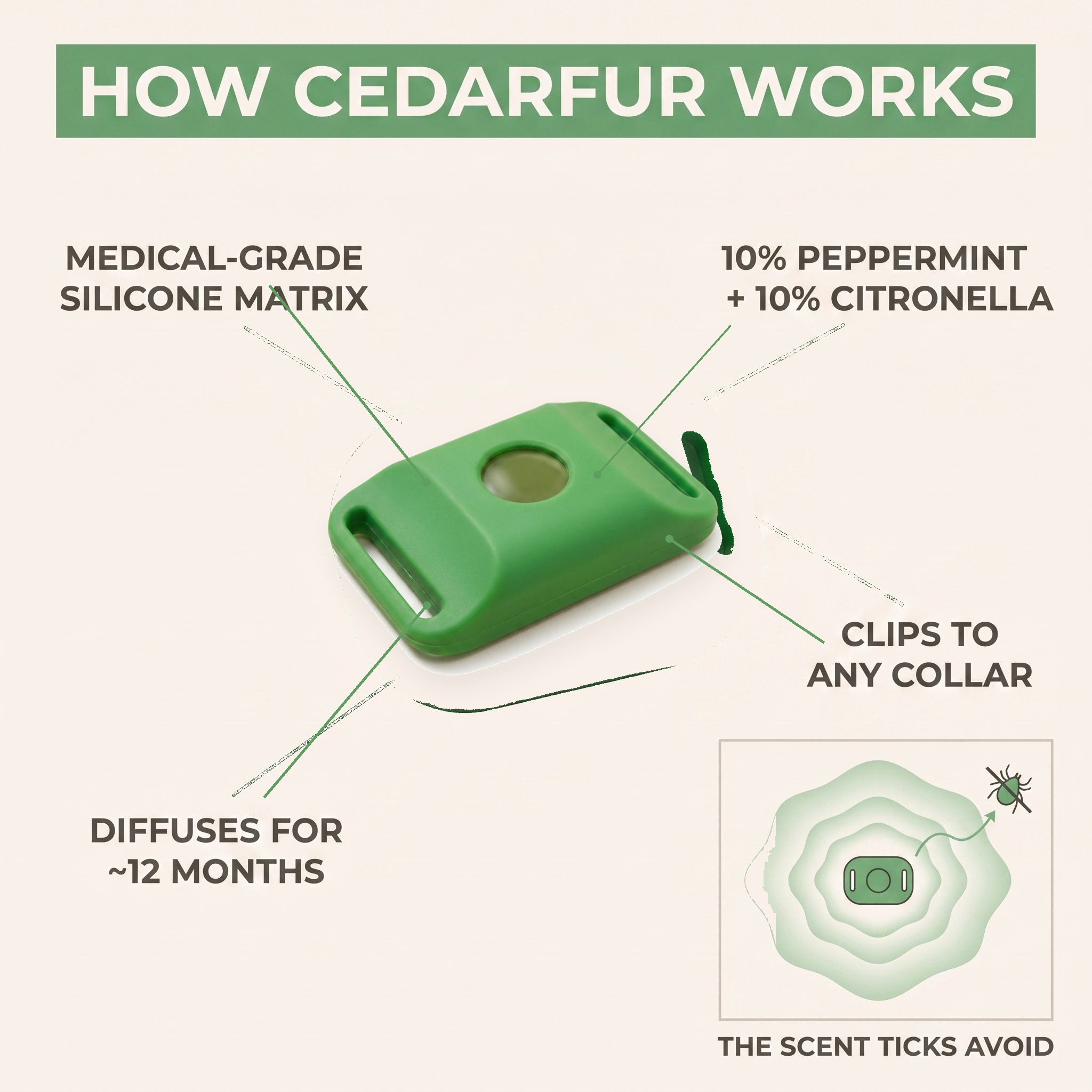
It gives off a scent from peppermint and citronella oils that fleas and ticks try to stay away from, so they keep their distance instead of latching on.
Nothing is swallowed.
Nothing sits in the bloodstream.
Nothing travels anywhere near whatever is already going on in the dog's head.
For an owner in this exact spot, that is the whole point.
It is the first tick option that physically cannot be the thing that hurt him.
After a bad night, there is no flea product left on the list to second-guess.
The silicone matrix releases the scent slowly for about twelve months, so once it is clipped on, it becomes one less thing to lie awake running through at 2am.

Deal ending in 00:00:00

"But does a scent really keep ticks off?"
It is the fair question, and the honest answer is in how a tick actually hunts.
A tick finds a dog by his warmth, his breath, and his body smell.
The peppermint and citronella cover those signals, so the tick has a harder time locating him in the first place.
It is a repellent, not a force field, and there is no point pretending otherwise.
An owner should still run her hands through the coat after a walk, the way the careful ones already do.
But owners who have moved to something worn on the dog instead of dosed into the dog report getting through whole tick seasons without pulling one off.
That is not a cure, and it is not a guarantee against Lyme.
It is a third option in a place where the system kept insisting there wasn't one.
If a dog has seizures, the owner has likely read the back of every box in that aisle while everyone else grabs theirs and leaves.
That is not paranoia.
That is the one person actually checking what the product is.
This is the first thing on the shelf that rewards the checking.
Deal ending in 00:00:00
Sources: U.S. FDA (2018 isoxazoline-class label warning on flea/tick chews); VCA Animal Hospitals.
🎁 Free Gifts With The 2 & 3-Pack
Up To 56% Off — Pick Your Pack
Color: Green
Add To Cart — $69.99 →Deal ending in: 00:00:00
Try it today with a 30-Day Money-Back Guarantee!